
Desserts
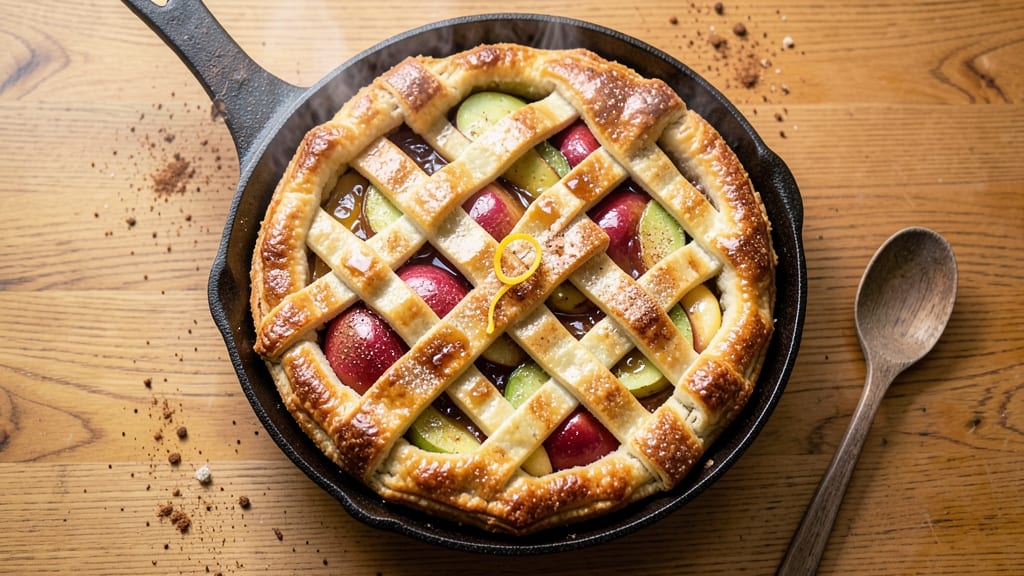
This 1894 German apple pie recipe transports you to a cozy Bavarian kitchen where spiced rum-infused crust meets caramelized apples—just as grandmothers once made it. The secret lies in the crust's warm cinnamon and rum notes, balanced by a filling so tender it practically melts.
I've reconstructed this recipe from historical baking records, preserving the old-world charm while adapting it for modern ovens.
The dough incorporates spiced rum and cold butter for a flaky, aromatic crust that holds up beautifully, whether baked open-faced or with a classic lattice. Inside, Braeburn apples caramelize with brown sugar and a touch of lemon juice, creating a filling that's both sweet and subtly tart.
The pie's aroma alone—warm spices mingling with caramelized fruit—will fill your home with nostalgia.
Baking this pie requires patience: the crust needs time to chill, and the filling must simmer until thick and glossy. But the result is worth every minute—a pie with a golden, crackly crust, tender apple layers, and just the right amount of spiced rum warmth.
Serve it warm with vanilla ice cream or whipped cream for an authentic taste of 19th-century German baking.
For those who prefer tradition, try the open-faced version—a common practice in old German recipes—where the top crust is omitted entirely. The filling's caramelized edges and aromatic crust will make every slice feel like a piece of history. Let's bring this classic to life in your kitchen.
Ingredients for 1894 german apple pie
Six apples, two crusts, and a whisper of spiced rum—this is what German grandmothers baked in 1894.
| Ingredient | Amount | Notes |
|---|---|---|
| All-Purpose Flour 🌾 | 4 cups | Unbleached preferred for flakiness |
| Unsalted Butter 🧈 | 1 cup | Cold, cubed for flaky layers |
| Spiced Rum 🍹 | ¼ cup | Dark rum with cinnamon notes |
| Granulated Sugar 🍚 | ¼ cup | For dough sweetness balance |
| Ice Water 💧 | ½ cup | Chilled for dough binding |
| Ground Cinnamon 🌿 | 2 tbsp | Ceylon cinnamon preferred |
| Braeburn Apples 🍎 | 6 medium | Peeled, cored, sliced thin |
| Light Brown Sugar 🍚 | 1 cup | Packed for caramelization |
| Lemon Juice 🍋 | ¼ cup | Freshly squeezed |
| Ground Cloves 🌶️ | 1 tsp | Freshly ground for warmth |
| Salt 🧂 | 1 ½ tsp | Diamond Crystal preferred |
| Vanilla Extract 🌸 | 1 tsp | Pure Madagascar vanilla |
| Heavy Cream 🥛 | ¼ cup | For filling richness |
| Cornstarch 🌾 | 2 tbsp | For thickening filling |
The apples are non-negotiable—Braeburns have that perfect balance of sweetness and tartness. Local farm stands often carry them in fall, but Whole Foods or Trader Joe's usually have them year-round. Look for firm apples with no bruises—they'll hold their shape during baking. For the rum, Bacardi Spiced Rum or Captain Morgan Dark Rum work perfectly, but any quality dark rum with cinnamon notes will do. The butter needs to be cold when cutting into the dough—take it out of the fridge just before mixing.
No spiced rum? Apple cider or brandy at the same amount works in a pinch, though the flavor will differ slightly. Short on Braeburns? Granny Smith and Honeycrisp mixed gives you a similar tart-sweet balance. The cornstarch is crucial—it's what gives that old-world filling its perfect thickness. If you can't find Ceylon cinnamon, regular ground cinnamon is fine, but you might want to add a pinch more for depth. For the dough, if you don't have ice water, very cold tap water works, but the dough will be slightly less flaky.
The dough needs at least 1 hour chilling before rolling—don't skip this. Store any unused dough between parchment paper in the fridge for up to 3 days, or freeze for 3 months. The filling can be prepped ahead and refrigerated for 24 hours before baking, which actually lets the flavors meld beautifully. Leftovers? This pie reheats wonderfully—just warm slices in the oven for 5-10 minutes until the crust is crisp again.
Why You'll Love This Recipe
- No-Roll Crust Shortcut: I swear by this butter-and-flour crust—just mix, press, and bake. No chilling, no fuss, and the spiced rum in the filling ties it all together like magic. Honestly, the only rolling pin I use is my imagination.
- Spiced Rum Magic: That splash of spiced rum in the filling? It’s the secret weapon. Warm cinnamon, a hint of vanilla, and just enough boozy depth to make every bite feel like dessert—even when it’s breakfast. (Yes, even on a Tuesday night.)
- Leftovers That Shine: This pie tastes better the next day—crisp edges soften just enough, the apples get even sweeter. I portion slices into containers and freeze them; reheated with a sprinkle of sugar, they’re my go-to for lazy mornings.
- Budget-Friendly Luxury: Flour, butter, sugar—these are pantry staples that don’t break the bank. The spiced rum adds a touch of indulgence without the price tag, and the crust comes together faster than takeout. My secret weapon for feeding a crowd without stress.
Step-by-step instructions for 1894 German apple pie
Here's how to create a pie that captures the spiced warmth of 19th-century German baking.
Make the Spiced Rum Crust
In a large bowl, combine the 4 cups all-purpose flour and 1.5 tsp salt. Cut in the 1 cup cold unsalted butter using a pastry cutter or your fingers until the mixture resembles coarse crumbs with pea-sized butter pieces. This texture is crucial for achieving that signature flaky texture.
Add the 0.25 cup spiced rum, 0.25 cup granulated sugar, and 2 tbsp ground cinnamon, mixing just until the dough begins to come together. The rum will add moisture and depth of flavor while keeping the crust tender. Add the 0.5 cup ice water gradually, mixing gently with a fork until the dough forms a shaggy mass that holds together when pressed.
Turn the dough onto a lightly floured surface and knead it just 4-5 times until it comes together. Divide it into two equal portions, wrap each in plastic wrap, and refrigerate for at least 30 minutes while you prepare the filling. Chilling prevents the butter from melting during rolling and helps the crust hold its shape.
Prepare the Caramelized Apple Filling
Peel, core, and thinly slice the 6 medium Braeburn apples into ⅛-inch thick slices. Toss them with the 1 cup packed light brown sugar, 0.25 cup lemon juice, 1 tsp ground cloves, and 1 tsp vanilla extract in a large bowl. The lemon juice prevents browning while the cloves add that authentic German spice warmth.
Transfer the apple mixture to a large skillet and cook over medium heat for 8-10 minutes, stirring occasionally, until the apples begin to soften and release their juices. The sugar will start to caramelize slightly, creating that deep, rich flavor we want in the filling.
In a small bowl, whisk together the 0.25 cup heavy cream and 2 tbsp cornstarch until smooth. Pour this mixture into the skillet with the apples and cook for an additional 3-4 minutes until the filling thickens and coats the back of a spoon. Remove from heat and let it cool completely before assembling the pie.
Assemble and Bake the Pie
Preheat your oven to 375°F. On a lightly floured surface, roll out one dough portion into a 12-inch circle about ⅛-inch thick. Transfer it to a 9-inch pie dish, pressing gently to fit. Trim any excess dough hanging over the edge.
Pour the cooled apple filling into the crust, mounding it slightly in the center. Roll out the second dough portion to the same size and place it over the filling. Press the edges together to seal, then crimp decoratively using a fork or your fingers. Cut a few small slits in the top crust to allow steam to escape.
Place the pie on a baking sheet lined with parchment paper (to catch any drips) and bake for 45-50 minutes until the crust is deep golden brown and the filling is bubbling through the slits. The pie is done when the crust sounds hollow when tapped on the bottom.
Finish and Serve
Remove the pie from the oven and let it cool on a wire rack for at least 2 hours before slicing. This resting time allows the filling to set properly and prevents a runny pie. The crust will firm up as it cools, and the flavors will meld beautifully.
Slice into 8 equal wedges and serve warm with a dollop of whipped cream or a scoop of vanilla ice cream. The combination of the spiced rum crust, caramelized apples, and warm spices creates a pie that tastes like a slice of German baking history.
Pro Tips For Making 1894 German Apple Pie
- Chill the Butter Hard: The 1894 recipe calls for cold butter in the crust, but I learned this the hard way—room-temperature butter makes a greasy mess. Pop the butter in the freezer for 15 minutes before cutting it into the flour, or even better, use it straight from the fridge. You’ll get those perfect flaky layers without fighting dough that sticks to your fingers.
- Cut Butter in Small Pieces: Don’t just dump the butter into the flour like you’re making shortbread. Cut it into tiny, pea-sized chunks—about the size of a dime—and work them into the flour with a pastry cutter or your fingers. This ensures even distribution and keeps the crust tender without turning it into butter soup.
- Soak Apples in Spiced Rum: The recipe mentions spiced rum, but don’t just splash it in and call it a day. Toss your sliced apples in the rum and let them sit for at least 10 minutes before baking. This lets the flavors infuse properly—no last-minute dousing, no wasted alcohol. (Yes, even if you’re impatient like me.)
- Use Ice Water Sparingly: The dough needs moisture, but too much ice water can make it gummy and tough. Start with 3-4 tablespoons and add just enough to hold the dough together when pinched—it should clump but not stick to your hands. If it’s too wet, add a splash more flour. This isn’t the prettiest method, but it’s the tastiest.
Serving suggestions for leftovers
Classic German Pairings
Serve your pie with a warm cup of German coffee—try a Melitta-filtered dark roast or Einspänner, a traditional Viennese coffee with whipped cream and chocolate shavings.
The bitterness cuts through the pie's sweetness beautifully. For a non-coffee option, spiced apple cider (warm with cinnamon sticks) mirrors the pie's flavors and feels nostalgically appropriate. 🍂
Whipped Cream vs. Ice Cream
Traditional German bakeries often served this pie with homemade whipped cream—lightly sweetened with vanilla and dusted with Ceylon cinnamon. For a modern twist, vanilla bean ice cream (like Ben & Jerry's or Häagen-Dazs) adds richness.
I prefer whipped cream for its airiness, but ice cream feels like a special occasion treat.
Open-Faced Tradition
In 1894, many German households baked open-faced pies—no top crust! Serve this version with a side of caramelized walnuts (toasted with brown sugar) or sour cream for tangy contrast.
The exposed filling stays warm longer and lets the rum aroma shine. This style was especially popular in rural Bavarian kitchens. 🌟
Bread Basket Accompaniment
Add a crusty German rye bread (like Pumpernickel) or buttery pretzels to your table. The bread soaks up any spilled filling while adding a satisfying crunch. For a sweet touch, serve butter cookies (like German Butterkeks) alongside—these were often baked alongside pies in old German homes.
Seasonal Fruit Pairings
In autumn, complement the pie with fresh pears or quince slices—both pair beautifully with the spiced filling. For winter, a spiced red wine (like Dornfelder) enhances the cinnamon and clove notes.
In summer, swap the rum in the crust for apple cider and serve with lemon sorbet for brightness. 🍷
Nutrition facts
Frequently asked questions
Why does this recipe use spiced rum in the crust?
The spiced rum was a common ingredient in 19th-century German baking, adding moisture and warm cinnamon notes to the crust. It creates that signature aromatic depth while keeping the pastry tender. For a non-alcoholic version, substitute with apple cider or orange juice—just reduce other liquids slightly to maintain dough consistency.
Can I make this pie without a top crust (open-faced)?
Open-faced pies were common in 1894 German households. Simply omit the second crust and bake with just the bottom layer. For extra flavor, sprinkle crushed cinnamon sugar on top before baking. The filling will caramelize beautifully with exposed edges.
What if my dough cracks when rolling?
Cracking usually means the dough is too warm. Chill it for 10-15 extra minutes before rolling, and keep your work surface lightly floured. If cracks appear, gently press them closed with your fingers or patch with extra dough scraps. The crust will still taste delicious—just slightly less uniform.
How do I store leftovers?
Store cooled slices in an airtight container at room temperature for 2 days, or freeze for 3 months. Reheat individual slices in a 350°F oven for 5-7 minutes to restore crispness. The filling reheats beautifully while the crust regains its golden crunch.
What's the best apple substitute if Braeburns aren't available?
For tartness, use Granny Smith or Fuji apples—mix with Honeycrisp for sweetness. Avoid overly soft varieties like McIntosh, which break down too quickly. If using mixed apples, reduce lemon juice to 2 tbsp to prevent over-acidification.