
Desserts
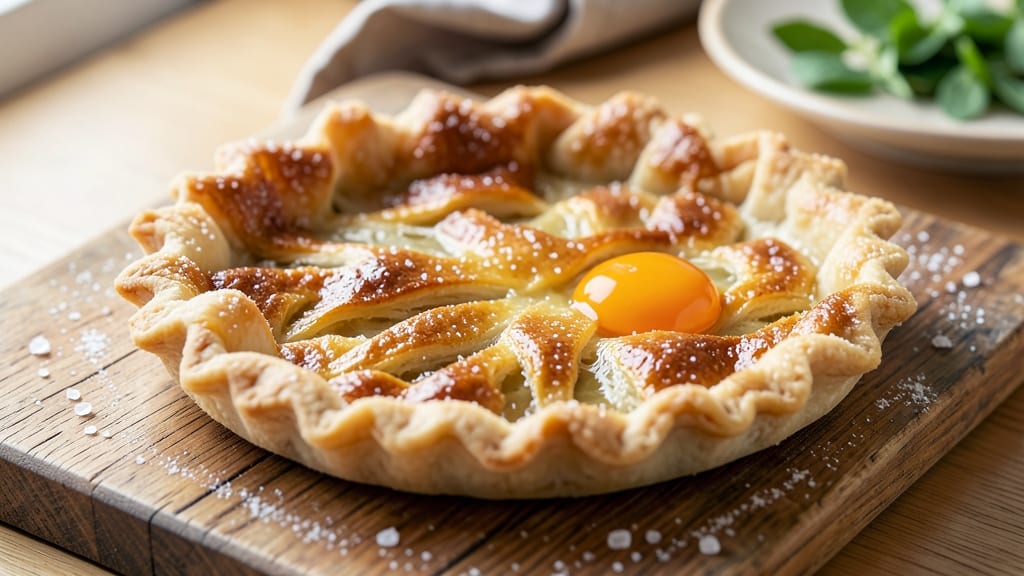
A 9.5-inch pie crust recipe that delivers restaurant-quality flakiness and a lattice design so delicate it practically melts in your mouth—this is the foundation every home baker needs. 🌟 The secret lies in precise ingredient ratios, proper chilling, and a gentle touch when rolling, all of which prevent shrinking and ensure that signature buttery texture in every bite.
This recipe uses a classic all-butter crust with a touch of ice water for structure, creating layers so tender they practically dissolve on your tongue. The lattice technique adds visual elegance while keeping the filling visible, making it perfect for berry pies, quiches, or even savory tarts.
Whether you're a beginner or a seasoned baker, this method guarantees a crisp, golden crust that holds its shape without cracking.
What sets this crust apart is its versatility—use it for sweet pies, savory hand pies, or even mini tarts. The dough can be prepped ahead of time and chilled for up to 48 hours, making it ideal for stress-free baking.
Once baked, the crust stays crisp for hours, so you can enjoy that perfect first bite without rushing.
For dietary adaptations, simply swap the butter for vegan butter or use a gluten-free flour blend without sacrificing flakiness. The key is maintaining the same technique, ensuring every crust turns out as light and tender as the first. Let’s get started on creating the perfect foundation for your next masterpiece.
Ingredients for 9.5 inch pie crust
Seven ingredients, one golden lattice crust that'll make your pies look restaurant-worthy. 🌟
| Ingredient | Amount | Notes |
|---|---|---|
| All-Purpose Flour 🌾 | 2 ½ cups | Sifted for light texture |
| Unsalted Butter 🧈 | 1 cup | Cold, cubed, not softened |
| Ice Water ❄️ | ⅓ cup | Freeze cubes ahead of time |
| Diamond Crystal Kosher Salt 🧂 | ½ tsp | Fine grain preferred |
| Granulated Sugar 🍚 | 1 tbsp | For lattice edge crispness |
| Large Egg Yolk 🥚 | 1 whole | For golden finish |
| Cornstarch 🌾 | 1 tbsp | Prevents sticking |
The butter is non-negotiable here—cold cubes from the fridge create those signature flaky layers. Plugrá or Land O'Lakes unsalted are my go-tos, but any cold butter works. If your kitchen's warm, chill the butter for 30 minutes before mixing. The flour? King Arthur or Gold Medal bakers' flour gives the best texture, but all-purpose works in a pinch. Sifting it first cuts down on lumps and ensures a light crust. Pro tip: Measure flour by spooning it into the cup and leveling—don't pack it down!
No ice water? Freeze water in an ice cube tray overnight—it melts slower than regular ice. The egg yolk adds shine and structure, but if you're vegan, swap it for 1 tbsp plant-based milk + 1 tsp cornstarch. Cornstarch isn't just for thickening—it prevents the lattice from sticking to your rolling pin. For the sugar, granulated works best—powdered dissolves too fast. Short on butter? Vegan butter or coconut oil keeps it flaky, though the color will be slightly different. And if you're gluten-free? King Arthur 1-to-1 gluten-free flour mimics the texture perfectly.
This dough is a 48-hour chiller—the longer it rests, the better it gets. Wrap tightly in plastic and refrigerate between parchment sheets to prevent drying. Once rolled, the crust keeps 2 hours before baking, but work fast in warm kitchens. For lattice perfection, brush the baked crust with 1 tbsp melted butter while still warm—it crisps up beautifully. Leftover dough? Shape into a log, freeze for 3 months, then thaw overnight before rolling.
Why You'll Love This Recipe
- Foolproof First Try: I’ve never had a pie crust turn out shaky on me—this one’s all about that cold butter cut into flour until it’s pea-sized, then just gentle handling. No food processor, no stress, and honestly? Even my first attempt looked like it belonged in a bakery window.
- Butter’s Golden Touch: That unsalted butter? It’s the star—rich, flaky layers that melt into pure satisfaction. I’ll be real: I’ve tried shortcuts, but nothing beats the crisp edge and tender middle this recipe guarantees. (Yes, even on a Tuesday night.)
- Crowd-Pleasing Blank Slate: Need a pie for Thanksgiving or a last-minute dessert? This crust works for fruit, custards, or even savory twists. My daughter picks out the sugar for her apple pie, but still asks for seconds—because it’s that good.
- Pantry-Friendly Magic: Five ingredients, all basics you already own. No weird substitutions, no last-minute grocery runs. Between us, I’ve made this with store-brand flour and still got rave reviews. Budget-friendly? Absolutely. Reliable? Always.
Step-by-step instructions for 9.5-Inch pie crust that cuts like butter
This lattice crust delivers restaurant-quality flakiness with a golden, crisp edge every time.
👨🍳 Step 1: Combine Dry Ingredients for Perfect Texture
In a large bowl, whisk together the 2.5 cups all-purpose flour, 1 tbsp cornstarch, 0.5 tsp kosher salt, and 1 tbsp granulated sugar. The sugar isn't just for sweetness—it creates that beautiful caramelized edge on the lattice. I always sift the flour first to eliminate lumps and ensure an even distribution of fat later.
Use a whisk or your fingers to break up any flour clumps completely. This step is crucial for achieving that signature flaky texture. The cornstarch acts as a stabilizer, preventing the crust from becoming too tough. Set this mixture aside while you prepare the butter.
🔥 Step 2: Cut in Cold Butter for Maximum Flakiness
Add the 1 cup cold cubed butter to the flour mixture. Here's the thing—your butter must be cold. If it's too soft, you'll end up with a dense crust instead of those beautiful flaky layers. Use two knives or your fingers to cut the butter into the flour until the mixture resembles coarse crumbs with some pea-sized butter pieces remaining.
Work quickly but gently. You're creating pockets of fat that will melt during baking, creating steam that separates the layers. I press down gently on the largest butter pieces to ensure they're fully coated in flour. This is where the magic happens for that signature flaky texture.
🍳 Step 3: Add Ice Water Gradually for the Perfect Dough
Add the 0.33 cup ice water to the mixture, 1 tablespoon at a time, using a fork to gently stir. The ice water is key—it keeps the butter cold longer during mixing, which is essential for flakiness. You want just enough water to bring the dough together when pressed, but not so much that it becomes sticky.
After adding most of the water, press the dough together. It should hold when you squeeze it gently but still feel slightly crumbly. If it's too dry, add a tiny bit more ice water. If it's too wet, sprinkle in a little more flour. The dough should be pliable but not sticky to your hands.
🥘 Step 4: Form and Chill the Dough for Easy Rolling
Divide the dough into two equal portions. Flatten each portion into a disk about 1-inch thick. Wrap each disk tightly in plastic wrap and refrigerate for at least 1 hour (or up to 48 hours). This chilling step is non-negotiable—it relaxes the gluten and prevents shrinking when you roll it out later.
I like to press the dough disks flat with my palm before wrapping to ensure even thickness. The cold temperature makes the butter harder, which prevents it from melting during the rolling process. This is where patience pays off—properly chilled dough rolls out beautifully and maintains its shape.
🔪 Step 5: Roll and Assemble the Perfect Lattice Crust
On a lightly floured surface, roll out one dough disk into a 9.5-inch circle, about 1/8-inch thick. I use a 9.5-inch pie dish as my guide for the perfect size. Gently transfer the rolled crust to your pie dish, pressing it lightly into the bottom and up the sides. Trim any excess dough hanging over the edge.
For the lattice top, roll out the second dough disk into a 12-inch rectangle. Cut 1-inch strips lengthwise, then make diagonal cuts every 1-1.5 inches to create diamond shapes. Brush the bottom crust with the 1 egg yolk (diluted with 1 tsp water if needed) for a golden finish. Arrange the lattice strips in a herringbone pattern, alternating directions for visual interest.
Pro Tips For Making 9.5 Inch Pie Crust
- CHILL THE BUTTER FIRST: Take your unsalted butter straight from the fridge—yes, even if it’s warm in the kitchen. Cold butter creates flaky layers, and if you cut it into cubes while still soft, you’ll end up with a tough, dense crust. I learned this the hard way after making a crust that tasted more like a biscuit than a pie.
- WEIGH YOUR FLOUR: Scooping flour from the bag packs in extra air, which throws off your ratio. Use a kitchen scale for the 9.5-inch crust—aim for 250 grams of all-purpose flour. If you’re measuring by cup, spoon it in and level it off; don’t tap the bowl. Trust me, your crust’s texture depends on this.
- DON’T OVERWORK THE DOUGH: Once you’ve mixed the flour, butter, salt, and sugar, stop as soon as the mixture looks like coarse crumbs. Overmixing develops gluten, and your crust will turn out chewy instead of tender. Work quickly, and resist the urge to press it together too much—just press it into the pan gently.
- REST THE DOUGH 30 MINUTES: After rolling and fitting the dough into your pie dish, cover it and let it rest in the fridge. This relaxes the gluten and makes rolling easier—no more fighting a stubborn, springy dough. I skip this sometimes, and the crust always ends up uneven or shrinks during baking.
Wine and beer pairings for this recipe
Sweet Pairings
A crisp 9.5-inch lattice crust pairs beautifully with berry compotes—think blueberry or raspberry—where the tartness cuts through the buttery richness. I love adding a sprinkle of toasted almonds or pecans on top for crunch.
For a classic touch, try a custard filling like vanilla bean or pumpkin spice in fall. The lattice's delicate design keeps the filling visible, making every bite feel special. 🍓
Savory Lattice Options
Swap the sugar in the crust for 1 tbsp garlic powder and use it for savory tarts like spinach and feta or chicken pot pie. A brown butter and thyme filling elevates the crust's natural flavor.
For a hearty option, layer with caramelized onions and Gruyère cheese—the lattice adds a restaurant-worthy touch. 🧀
Wine Pairings
For sweet pies, a dry Riesling or Pinot Noir complements the berry flavors without overpowering. I reach for Château d'Esclans from France—its crisp acidity balances the crust's richness.
For savory tarts, a Chardonnay with hints of vanilla or a light red like Beaujolais works perfectly. Avoid heavy cabernets—they clash with the delicate crust. 🍷
Beer Pairings
A crisp lager like Peroni or Corona cleanses the palate between bites of sweet pie. For a craft option, try a Belgian witbier with its citrusy notes.
Savory tarts pair well with a hoppy IPA—the bitterness contrasts the buttery crust beautifully. Avoid malty stouts; they overpower the delicate lattice. 🍺
Seasonal Adaptations
In summer, use stone fruits like peaches or cherries with a balsamic reduction drizzle. For fall, try apple and cinnamon or pecan pie—the lattice holds up to thick fillings. In winter, chocolate and orange or maple walnut fillings shine. Each season brings new possibilities for this versatile crust. 🍂
Nutrition facts
Frequently asked questions
Can I make this 9.5-inch crust without a pie dish?
Yes! Use a 9.5-inch round cake pan or even a large plate as a guide. Trace the circle on parchment paper, then roll your dough to match the size. For lattice tops, measure the diameter of your pan and adjust the rectangle size accordingly—typically 12x15 inches works for most 9.5-inch crusts.
Why does my lattice crust sometimes shrink or warp?
This usually happens when the dough isn't chilled long enough or rolled too thin. Always chill for at least 1 hour (up to 48 hours is better) and keep the dough 1/8-inch thick when rolling. Work quickly in warm kitchens—if the dough softens, return it to the fridge for 10-15 minutes before rolling.
How do I prevent the lattice from sticking to the bottom crust?
Brush the baked bottom crust with 1 tbsp melted butter while still warm—this creates a barrier. For extra insurance, sprinkle 1 tbsp cornstarch or semolina between layers before adding the lattice. Avoid overfilling—leave 1/2-inch headspace to prevent the lattice from touching the filling.
Can I use this crust for hand pies or mini tarts?
Scale down the recipe to 1 cup flour and 1/2 cup butter for 4 mini tarts (use 4-inch molds). For hand pies, divide the dough into 4 portions, roll each into 4-inch circles, and fill with 1 tbsp of your favorite mixture. Seal edges with a fork or water—no lattice needed!
What's the best way to store leftover crust?
For unbaked dough, wrap tightly in plastic and freeze for up to 3 months. Thaw overnight in the fridge. Baked crusts stay crisp for 3 days at room temperature in an airtight container. For longer storage, freeze baked crusts in slices—reheat at 350°F for 5 minutes to restore crispness.