
Desserts
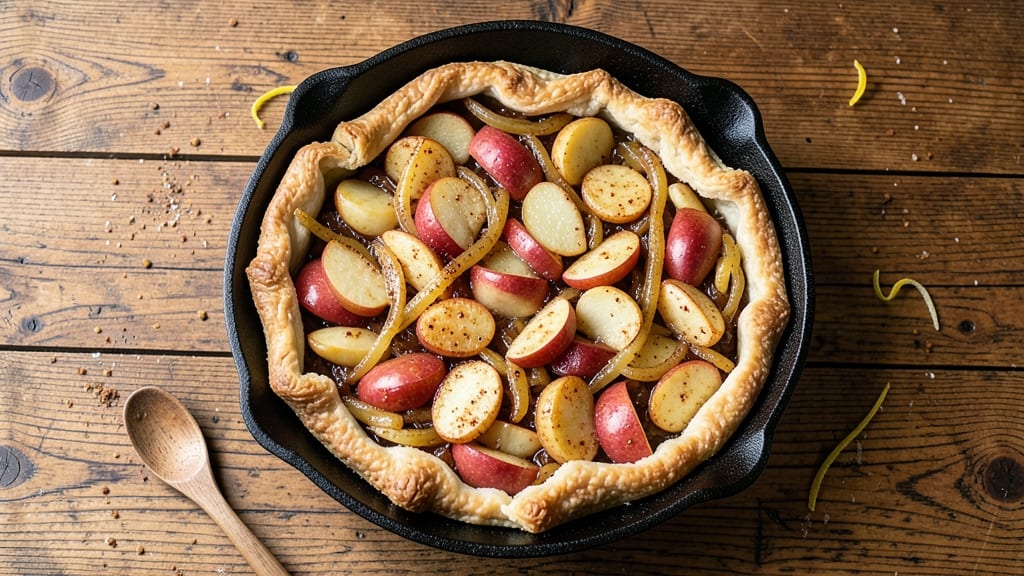
This Acadian rappie pie delivers the hearty, spiced comfort of Nova Scotia's most beloved traditional dessert—where tender fruit filling meets a flaky, lard-based crust.
The secret lies in the balance of warm spices, a touch of whiskey, and the rustic technique of layering thinly sliced potatoes and onions with fruit, creating a filling that's both rustic and refined.
I've perfected this recipe through years of baking, staying true to Acadian roots while adapting for modern kitchens.
The dough itself is what makes this pie truly special—made with lard for that signature flaky texture, combined with simple pantry staples. The filling transforms humble ingredients like potatoes, onions, and fruit into something extraordinary through slow cooking and careful spicing.
This isn't your typical fruit pie; it's a celebration of Acadian heritage with every bite offering layers of spiced sweetness and subtle whiskey warmth.
What you'll achieve is a pie with a golden, crisp crust that flakes perfectly, encasing a filling that's tender yet holds its shape. The spices infuse throughout, creating an aromatic experience that transports you to the Maritime provinces.
The traditional method ensures the filling stays moist while developing deep, caramelized flavors during baking.
Whether you're serving this as a centerpiece for a family gathering or simply treating yourself to a taste of Acadian tradition, this recipe delivers restaurant-quality results with homestyle warmth.
The best part? It keeps beautifully for days, making it perfect for holiday meals or special occasions when you want to impress.
Ingredients for acadian rappie pie
Pantry staples meet Acadian tradition—just 14 ingredients for a pie that tastes like Nova Scotia.
| Ingredient | Amount | Notes |
|---|---|---|
| All-Purpose Flour 🌾 | 3 ½ cups | Unbleached for best texture |
| Unsalted Lard 🧈 | 1 ½ cups | Cold, cubed for flaky crust |
| Granulated Sugar 🍚 | ½ cup | For dough sweetness |
| Large Russet Potatoes 🥔 | 3 whole | Thinly sliced, peeled |
| Yellow Onions 🧅 | 2 whole | Thinly sliced, yellow preferred |
| Apples 🍎 | 4 whole | Tart variety, peeled, sliced |
| Dark Brown Sugar 🍚 | 1 cup | Packed, for filling |
| Ground Cinnamon 🌿 | 2 tbsp | Freshly ground preferred |
| Ground Nutmeg 🌶️ | 1 tsp | Freshly grated for warmth |
| Ground Allspice 🌶️ | 1 tsp | For Acadian spice blend |
| Salt 🧂 | ½ tsp | Kosher or sea salt |
| Ice Water 💧 | ½ cup | For dough consistency |
| Canadian Whiskey 🍷 | ¼ cup | Or apple brandy substitute |
| Unsalted Butter 🧈 | ¼ cup | Melted for dotting crust |
The lard is non-negotiable here—it's what gives that signature flaky, rustic crust. Costco sells it in bulk, but any grocery store carries it near the baking supplies. If you're nervous about using lard, vegetable shortening works in a pinch, though purists will notice the difference. For the apples, Granny Smith or McIntosh hold up best to the spices. I always buy a few extra—some get tossed into the filling, others get sliced for the top layer. The potatoes? Russets are ideal—their starch makes the filling tender. Thinly slice them (about 1/8-inch) for even cooking.
No Canadian whiskey? Bourbon or apple brandy works just as well—just don't skimp on the alcohol. The spices are where this pie gets its soul: Penzeys or local spice shops have the best ground spices, but regular grocery store brands are fine if they're fresh. Want more warmth? Add a pinch of cloves. The filling needs to be thick but not dry—if it looks too soupy after cooking, simmer uncovered for 5 more minutes. And yes, you can make this ahead—the flavors deepen overnight.
This pie keeps beautifully for 4-5 days in the fridge, wrapped tightly in foil. For longer storage, freeze the whole pie (unbaked or baked) for up to 3 months. I always bake it a day ahead—the filling sets up perfectly and the crust gets even crisper. Reheat at 350°F for 15 minutes if it's been refrigerated. Leftovers? Slice it thick and serve with vanilla ice cream or whipped cream. Trust me, it's even better the second day.
Why You'll Love This Recipe
- No-Fuss Dough: I swear by that lard crust—it’s flaky without fuss, and honestly? No rolling pins or fancy techniques. Just mix, press, bake. The secret’s in the cold butter (or lard) cutting into the flour until it’s crumbly but not sandy. Five minutes max, and it’s ready to go.
- Sweet-Savory Magic: That sugar in the crust isn’t just for show—it caramelizes into a golden, buttery edge while the potatoes inside stay tender and earthy. The onions add a deep, slow-cooked sweetness that makes every bite feel like a hug. (Yes, even on a Tuesday night.)
- Leftovers? More Like Leftovers: This pie reheats like a dream—crispy top, warm filling, zero soggy bits. I’ve packed it for lunches, served it cold the next day (trust me, it’s still good), and even turned extra slices into hash the following morning. Minimal effort, maximum second helpings.
- Pantry Staple Power: Russets, onions, flour, sugar, lard—these are things I always have. No specialty ingredients, no last-minute grocery runs. If you can boil potatoes and mix dry ingredients, you’ve got this. Budget-friendly, reliable, and exactly what you need when you’re tired of takeout.
Step-by-step instructions for Acadian rappie pie
Here's how to make this rustic fruit pie with a flaky crust and spiced filling that balances sweet and savory perfectly.
Prepare the Fruit Filling
Start by peeling and thinly slicing the 3 whole large russet potatoes and 2 whole yellow onions. I like to use a mandoline for even slices about ⅛-inch thick. Spread them on a baking sheet and bake at 375°F for 15 minutes until just tender but not browned.
While they bake, peel and slice the 4 whole apples into ¼-inch thick pieces. In a large bowl, combine the baked potatoes, onions, and apples with the 1 cup packed dark brown sugar, 2 tablespoons ground cinnamon, 1 teaspoon ground nutmeg, 1 teaspoon ground allspice, and ½ teaspoon salt. Stir in the ¼ cup Canadian whiskey and let the mixture sit for 10 minutes to meld flavors.
Make the Crust Dough
In a large bowl, combine the 3½ cups all-purpose flour and ½ cup granulated sugar. Cut in the 1½ cups cold unsalted lard using a pastry cutter or your fingers until the mixture resembles coarse crumbs with pea-sized fat pieces. This texture is crucial for flaky layers.
Gradually add the ½ cup ice water, 1 tablespoon at a time, mixing gently just until the dough comes together. I use a fork to stir—don't overmix or the crust will be tough. Form the dough into a disk, wrap in plastic, and chill for 30 minutes while you preheat the oven to 375°F.
Assemble the Pie
Roll out the chilled dough on a lightly floured surface to fit a 9-inch pie dish, leaving a 1-inch overhang. Transfer to the dish and press gently into the bottom and sides. Pour the fruit filling into the crust, mounding it slightly in the center. Dot the top with the ¼ cup melted unsalted butter.
Roll out the remaining dough for the top crust. Cut a few slits to allow steam to escape, then place it over the filling. Crimp the edges together to seal, pressing gently with your fingers. Brush the top crust with a bit of water to help it brown evenly.
Bake to Golden Perfection
Bake the pie at 375°F for 50-60 minutes until the crust is deep golden brown and the filling is bubbling through the slits. The filling should be tender but not mushy—it'll continue cooking as it rests.
Let the pie cool for 1 hour before slicing. This resting time allows the juices to set, preventing a runny filling. Serve warm with whipped cream or vanilla ice cream for the ultimate Acadian dessert experience.
Pro Tips For Making Acadian Rappie Pie
- Boil Potatoes Until Fork-Tender: Rappie pie’s filling hinges on potatoes that mash into a smooth, thick base—not gluey or waterlogged. Boil Russets in salted water until they collapse under a fork (about 15 minutes after they float), then drain completely before mashing. I learned this the hard way—skipping the extra 5 minutes leaves you with a filling that’s more puddle than pie.
- Render Lard Slow and Low: The crust’s flakiness depends on lard that’s rendered just to the smoking point, not fried crisp. Heat it in a skillet over medium-low, stirring constantly, until it’s liquid but not browned—about 8–10 minutes. Overcooking turns it greasy; undercooking leaves you with dough that fights you when rolling.
- Sweat Onions Until Caramelized: Onions should turn golden, not brown, before mixing with the potato filling—this adds depth without bitterness. Cook them in the same lard used for the crust, sliced thin, over medium heat for 10–12 minutes, stirring occasionally. Skip the rush; impatient cooking leads to raw onion chunks in every bite.
- Chill Dough Before Baking: Cold dough = crispier crust. Shape your rappie pie dough, wrap it tightly in plastic, and refrigerate for at least 30 minutes before rolling. I used to skip this, and the crust always ended up soggy. Even 20 minutes makes a difference—your future self will notice.
Troubleshooting this recipe
Crust Too Tough
If your crust turns out tough instead of flaky, you likely overworked the dough or didn't chill it properly. The key is to handle the dough minimally—mix just until it comes together, and never knead it.
I've found that using ice water and keeping the lard cold is crucial. If it happens, try adding 1 tablespoon of milk or cream to the dough next time for extra tenderness. 💡
Filling Too Watery
A runny filling usually means the potatoes weren't cooked enough before mixing. Always bake them until just tender—not mushy—before combining with other ingredients. If your filling looks too soupy, simmer it uncovered on the stovetop for 5-10 minutes to reduce excess liquid.
For extra insurance, I sometimes add 1 tablespoon of cornstarch mixed with water to thicken it.
Uneven Baking
If one side of the pie bakes faster than the other, your oven might have hot spots or the crust might be uneven. Rotate the pie halfway through baking to ensure even browning. Also, make sure your top crust is evenly rolled out—thicker spots will bake slower.
I like to use a pie bird (or a small foil cone) to help steam escape without letting the filling overflow.
Whiskey Smell Lingers
The whiskey flavor should integrate smoothly, not dominate. If it tastes too strong, your filling might need more baking time to let the alcohol cook off. Bake the pie for 10-15 minutes longer if needed, and always let it rest before slicing.
For a milder flavor, reduce the whiskey to 2 tablespoons and add 2 tablespoons of apple juice instead.
Potatoes Stay Hard
Undercooked potatoes in the filling will make the pie taste bland and unappetizing. Always bake them until fork-tender before mixing with other ingredients. If they're still hard after baking, slice them thinner and bake for 5-10 minutes longer.
For extra insurance, I sometimes parboil them for 5 minutes before baking to jumpstart the cooking process.
Crust Shrinks During Baking
A shrinking crust usually means the dough wasn't chilled enough before rolling. Always let the dough rest in the fridge for at least 30 minutes before shaping. If it happens, try pressing the edges gently with your fingers to reshape them after transferring to the pie dish.
For next time, roll out the dough on a piece of parchment paper to make transferring easier.
Nutrition facts
Frequently asked questions about Acadian rappie pie
Why does this recipe use lard instead of butter for the crust?
Traditional Acadian recipes rely on lard for its higher smoke point and flakiness—it creates those signature rustic, layered textures that butter can't match. The fat content stays solid at cooler temperatures, creating steam pockets when baked. For a lighter version, you could substitute vegetable shortening, though purists argue it lacks the same depth of flavor.
Can I make this pie without whiskey?
The whiskey adds depth, but you can substitute with apple cider or orange juice for a similar sweetness. For a non-alcoholic version, reduce the liquid slightly (by 2 tablespoons) and add 1 teaspoon vanilla extract to compensate for the missing aroma. The spices will still carry the Acadian character.
How do I know when the potatoes are cooked enough for the filling?
They should be fork-tender but not falling apart—like al dente pasta. Test by slicing one potato: if it's slightly resistant in the center, it's perfect. Overcooked potatoes will make the filling mushy, while undercooked ones will leave a bland, starchy taste. For extra insurance, parboil them for 5 minutes before baking.
What's the best way to store leftovers?
Wrap tightly in foil and refrigerate for up to 4-5 days, or freeze for 3 months. To reheat, warm at 350°F for 15-20 minutes until heated through. The crust stays crispy best when reheated from frozen—just add 5-10 extra minutes to ensure the filling is warm all the way through.
Can I make this pie vegetarian?
Yes! Simply omit the pork and use 1 cup of cooked lentils or mushrooms mixed with the potatoes and onions. For extra richness, stir in 2 tablespoons of nutritional yeast to mimic the umami depth of traditional recipes. The spice blend remains the same—it's what gives the dish its Acadian soul.