
Desserts
Alton Brown's apple pie crust recipe delivers the perfect balance of flaky layers and buttery richness that makes every slice unforgettable. The secret lies in his signature two-butter technique, where cold butter creates those iconic, melt-in-your-mouth flakes that separate effortlessly.
I've perfected this method over years of baking, and it consistently produces a crust so impressive, it rivals anything from a bakery—without the fuss.
What sets this recipe apart is the precision of the technique: using cold butter cut into pea-sized pieces ensures maximum flakiness, while a precise 1:2:3 ratio of flour to fat to ice water guarantees a sturdy yet tender crust.
The dough rests twice—once in the fridge and again after rolling—to relax the gluten and prevent shrinking. This isn't just a crust; it's the foundation for a pie that becomes the star of any dessert table.
By the time you pull this pie from the oven, you'll have golden-brown edges with delicate, lacy layers that practically dissolve in your mouth. The aroma alone—warm, buttery, with a hint of cinnamon from the filling—will have everyone gathering around the kitchen.
This is the kind of crust that turns a simple apple pie into a showstopper, worthy of holidays or weeknight dinners alike.
The beauty of this method is its adaptability: use it for classic apple pie, savory quiche, or even a rustic galette. Once you master Alton Brown's technique, you'll never settle for anything less than restaurant-quality flakiness at home. Let's get started on creating the perfect crust.
Ingredients for alton brown apple pie crust
Precision ingredients for Alton Brown's legendary two-butter apple pie crust.
| Ingredient | Amount | Notes |
|---|---|---|
| All-Purpose Flour 🌾 | 3 cups | Sifted for light texture |
| Unsalted Butter 🧈 | 1 cup | Cold, cubed into pea-sized pieces |
| Unsalted Butter 🧈 | ½ cup | Melted for brushing |
| Ice Water 💧 | ½ cup | Chilled thoroughly |
| Diamond Crystal Kosher Salt 🧂 | ½ tsp | Fine grain preferred |
| Granulated Sugar 🍚 | 1 tbsp | For dough edges |
| Granulated Sugar 🍚 | 1 tbsp | For pie crust sprinkle |
| Large Egg Yolk 🥚 | 1 whole | Optional for egg wash |
The butter is non-negotiable here. Plugrá brand or Land O'Lakes unsalted are my go-tos—they stay cold longer during mixing. Buy it in 1-pound blocks from the dairy case, not sticks, so you can cube it yourself. The ice water? Freeze cubes overnight for maximum chill. For the flour, King Arthur or Bob's Red Mill all-purpose are ideal—they have just enough protein for structure without overdeveloping gluten. Skip the bread flour unless you want a tougher crust. And measure that flour accurately—use the spoon-and-level method for consistency.
No Plugrá butter? European-style butter like President or Bregott works beautifully—higher fat content means better flakiness. Short on ice water? Freeze your melted butter in an ice cube tray, then use those cubes instead. The egg yolk is optional but worth it for that golden finish. If you skip it, brush the crust with milk or cream instead. For the sugar sprinkles, turbinado or raw sugar gives a prettier crunch than granulated. And if you're making a savory quiche instead of pie, reduce the sugar to 1 tsp total—just enough to caramelize the edges slightly.
This dough is delicate—handle it like you would a fresh flower. Once mixed, wrap tightly in plastic and refrigerate for at least 2 hours (overnight is best). When rolling, keep the dough between two sheets of parchment paper to prevent sticking. The second rest after rolling is crucial—30 minutes minimum in the fridge. Store unused dough in the fridge for up to 3 days or freeze for 3 months. For the best results, let the dough sit at room temperature for 10-15 minutes before rolling to make it more pliable.
Why You'll Love This Recipe
- No-Fuss Technique: I swear by this method—just pulse the cold butter and flour in a food processor until it looks like wet sand. No rolling pin, no stress, and the ice water keeps it from turning into a greasy mess.
- Butter Love: Two sticks of cold, unsalted butter cut into the flour? That’s the secret. It delivers that signature flaky, melt-in-your-mouth texture that makes every bite worth it.
- Double Duty Crust: Make it ahead and freeze it—it’s my go-to for Thanksgiving leftovers or last-minute potlucks. Just thaw, fill, and bake. No one will guess it wasn’t made the same day.
- Budget-Friendly Staples: All you need is flour, butter, salt, and ice water—ingredients you already have lurking in your pantry. No fancy shortcuts, just pure, reliable flavor without breaking the bank.
Step-by-step instructions for alton brown's two-butter pie crust
Master the secret to flaky perfection with this precise, two-layer butter technique.
Prepare the Dough Foundation
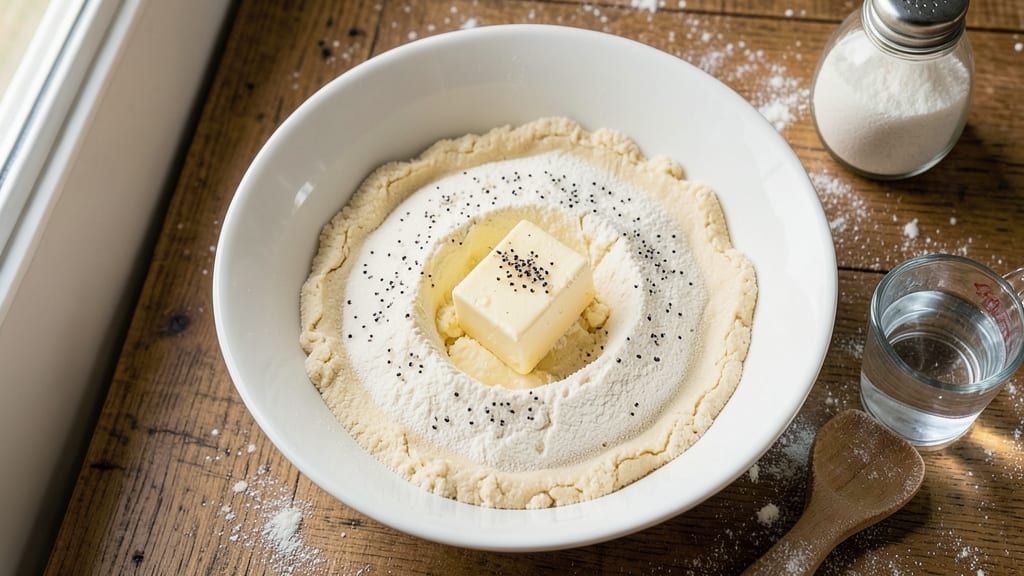
In a large mixing bowl, combine the 3 cups All-Purpose Flour and 0.5 tsp Diamond Crystal Kosher Salt. Use your fingers to whisk them together until evenly distributed—this ensures consistent seasoning throughout the dough. Create a well in the center and add the 1 cup Unsalted Butter, still cold and cubed into pea-sized pieces.
Using a pastry cutter or your fingers, work the butter into the flour until you reach a texture resembling coarse cornmeal. You're aiming for pea-sized butter pieces—no smaller, or the crust will lose its flakiness. If the mixture feels too dry, that's normal; we'll add the ice water next. This initial dry mixing prevents the butter from melting prematurely.
Incorporate Ice Water for Structure
Gradually add the 0.5 cup Ice Water, 1 tablespoon at a time, using a fork to gently stir after each addition. The water should be ice cold—this prevents the butter from softening too quickly. Mix just until the dough begins to come together, but don't overwork it. The dough should hold its shape when pressed but still feel slightly crumbly.
At this stage, the dough may look shaggy, but that's exactly what we want. The butter pieces need to remain distinct to create those signature flaky layers. If the dough feels too dry, add another 1 teaspoon of ice water; if too wet, sprinkle in 1 tablespoon of flour. The goal is a dough that's just cohesive enough to handle but still maintains its crumbly texture.
Form and Chill the Dough
Divide the dough into two equal portions and shape each into a disk about 1 inch thick. Wrap each disk tightly in plastic wrap and refrigerate for at least 2 hours, or up to 48 hours. This long chilling time is crucial—it allows the gluten to relax and the butter to solidify completely, setting the stage for maximum flakiness.
During chilling, the dough will firm up significantly. This resting period also prevents the butter from melting when it hits the hot pie dish. I like to place the dough on a baking sheet before wrapping to maintain shape, but this step is optional. The key is patience—rushing this process will compromise the crust's texture. Trust me, the wait is worth it.
Roll and Layer the Crust
On a lightly floured surface, roll out one dough disk into a 12-inch circle, about ⅛ inch thick. The goal is even thickness—this ensures even baking. If the dough resists rolling, let it sit at room temperature for 5-10 minutes to soften slightly. Transfer the rolled crust to a 9-inch pie dish and trim the edges to create a ½-inch overhang. Sprinkle the edges with 1 tablespoon Granulated Sugar—this creates a beautiful caramelized rim.
Roll out the second dough disk and place it over a sheet of parchment paper. Brush the top surface with the 0.5 cup melted Unsalted Butter, then carefully drape it over the first crust, matching the edges. Trim both crusts to create a clean, even rim. The melted butter between layers will create steam during baking, enhancing the flakiness. Press the edges together firmly to seal, then crimp decoratively with a fork or your fingers.
Blind-Bake for Structure
Preheat your oven to 375°F. Line the crust with parchment paper and fill it completely with pie weights or dried beans. Bake for 15 minutes to prevent the crust from puffing up when you add the filling later. Remove the weights and bake for another 10-12 minutes until the crust is golden brown and just beginning to set. The edges should be firm but not fully cooked—this allows them to brown beautifully when the pie bakes.
For the egg wash option, beat the 1 whole Large Egg Yolk with 1 tablespoon water and brush it lightly over the crust before the final minutes of baking. This creates a golden finish, but it's optional—some prefer the natural color. Let the crust cool slightly before adding your apple filling. The residual heat will help the crust finish baking as the pie cooks.
Pro Tips For Making Alton Brown Apple Pie Crust
- CHILL THE BUTTER FIRST: Alton’s recipe calls for cold butter, but I’ve learned the hard way—really cold means cutting it into ½-inch cubes and sticking them in the freezer for 10 minutes before mixing. Warm butter is the fastest way to end up with a greasy, tough crust instead of flaky layers. (Yes, even if you’re impatient like me.)
- WEIGH THE FLOUR: Scooping flour from the bag packs it down, and this crust relies on precise ratios. Use a kitchen scale for the 2 cups—it should measure about 250 grams. Packed flour throws off the texture, and you’ll end up with a crust that’s either dry or gummy. (I know, measuring cups are easier, but trust me on this.)
- WORK FAST AFTER WATER: Once you add the ice water to the dough, stop fiddling. Overmixing turns the butter into tiny globs instead of flaky sheets. Mix just until the dough comes together—about 10-12 strokes—and then get it chilled immediately. The second you hesitate, you’re fighting the clock.
- PRESS THE CRUST EVENLY: When rolling out the dough, don’t press harder in some spots—it’ll bake unevenly. Use a rolling pin to keep even pressure, and lift the dough occasionally to check for thin spots. A pie crust with varying thickness means some parts will burn while others stay doughy. (I’ve seen it happen more times than I’d like to admit.)
Wine and beer pairings for this dish
Sweet Wine Pairings
Apple pie's caramelized sweetness pairs beautifully with dessert wines that complement its spiced notes. A Moscato d'Asti from Italy—light, fizzy, and slightly floral—cuts through the richness while enhancing the apple's natural sweetness. I reach for Bartolo Mascarello's version, which balances fruitiness with a crisp finish.
For a red option, try a Pinot Noir with bright acidity, like Domaine Serene's Oregon vintage—it mirrors the pie's cinnamon warmth without overpowering. 🍷
Spiced Beer Complements
Craft beers with honey or caramel notes elevate apple pie's flavors. A Belgian-style witbier like Stella Artois Wit (or Hoegaarden) adds citrusy brightness that cleanses the palate between bites.
For something bolder, sip on a honey brown ale—I love Allagash Honey Brown—its malty sweetness mirrors the pie's caramelized crust. Avoid heavy stouts; their roastiness clashes with the delicate spice balance. 🍺
Coffee & Liqueur Finishes
After the pie, serve espresso or cold brew to contrast the dessert's sweetness. A shot of Amaretto (like Disaronno) drizzled over vanilla ice cream adds almond notes that harmonize with the pie's cinnamon.
For a non-alcoholic twist, chai tea with a splash of vanilla cream mimics the spiced apple experience without the booze. The warmth of the tea enhances the pie's lingering aroma. ☕
Regional Wine Traditions
In New England, where apple orchards thrive, local wineries craft ice wine that pairs perfectly with pie. Glen Ellen Vineyards' California Cabernet Franc offers earthy undertones that complement spiced apples.
For a Southern U.S. twist, try Moscato from Texas wineries—their versions often include peach notes that echo the pie's filling. Each region's terroir brings unique depth to the pairing. 🗺️
Unexpected Pairing Twist
Swap wine for sparkling cider—Martinelli's or Woodchuck Hard Cider—to keep it refreshing. The effervescence cuts through the pie's richness, while the apple notes create a nostalgic harmony.
For a savory contrast, serve with sharp cheddar (like Cabot) on a board—its tangy bite balances the dessert's sweetness. This combo works surprisingly well at potlucks. 🍏
Nutrition facts
Frequently asked questions
Why does Alton Brown use two layers of butter?
The double butter technique creates extra flakiness through steam during baking. The top melted butter layer generates moisture that separates the bottom crust's butter layers beautifully. This is what gives the iconic "lacy" texture that sets this crust apart from standard recipes.
Can I substitute margarine for butter?
Not recommended for this recipe. Margarine contains water, which can make the crust soggy. If absolutely necessary, use 100% vegetable shortening instead—it has no water content and mimics butter's performance. The flavor won't be identical, but the texture will be closer.
What's the best way to roll out the dough without cracking?
Keep the dough cold between two sheets of parchment paper while rolling. Use gentle, even pressure and rotate the dough as you roll to maintain thickness. If it cracks, simply press the pieces back together—it won't affect the final texture. The key is patience and consistent thickness.
How do I fix a soggy bottom crust?
Prevent it by blind-baking the crust for 15-25 minutes before adding filling. If it's already soggy, sprinkle 1/4 cup crushed cornflakes or finely chopped nuts on the bottom crust before adding filling. The extra thickness absorbs moisture and creates a barrier.
Can I make this crust ahead of time?
Shape and chill the dough disks for up to 48 hours before rolling. For best results, assemble the pie crust (without filling) and freeze it on a baking sheet for 1 hour, then transfer to a sealed container. Thaw in the fridge overnight before baking.