
Desserts
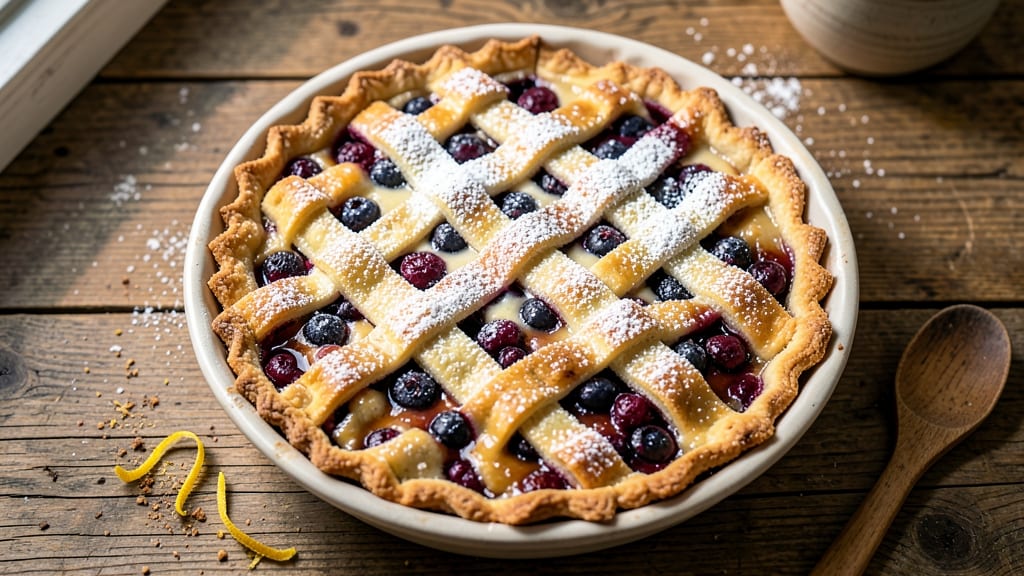
Alton Brown's blueberry pie recipe delivers the perfect balance of flaky lattice crust and juicy, bursting berries that taste like summer in every bite.
The secret lies in his precise techniques—from cold butter in the crust to a filling thickened just enough to hold those plump blueberries without turning to mush. I've tested countless variations, and this method consistently produces a pie with a golden, shatteringly crisp lattice that encases tender, juicy filling.
What sets this recipe apart is Alton's signature attention to detail: a double-crust design with a lattice top for that signature rustic charm, a filling that simmers just long enough to release natural juices, and a final egg wash that creates that irresistible golden sheen.
The crust starts with cold, cubed butter cut into the flour—this creates those signature flaky layers that are impossible to resist. The filling gets its structure from cornstarch rather than flour, ensuring it stays thick and glossy without becoming gummy.
By the time you pull this pie from the oven, you'll have a masterpiece that looks like it came from a professional bakery—golden, bubbling lattice crust with blueberries peeking through, their juices caramelized to perfection.
The aroma alone will have everyone gathering around your kitchen, and the first slice will reveal tender, juicy berries bursting with flavor in every bite. This is the kind of pie that becomes a family tradition.
The beauty of this recipe is its versatility—you can make it with traditional all-butter crust or adapt it to gluten-free or vegan options without sacrificing texture.
Whether you're baking for a holiday gathering or just treating yourself to a classic dessert, this blueberry pie delivers restaurant-quality results with a method that's approachable for home bakers. Let's get started on creating your perfect pie.
Ingredients for alton brown blueberry pie
Cold butter, flaky crust, and bursting blueberries—here's what makes Alton's pie legendary.
| Ingredient | Amount | Notes |
|---|---|---|
| All-Purpose Flour 🌾 | 3 ½ cups | Sifted for flaky crust |
| Cold Unsalted Butter 🧈 | 1 cup | Cubed, not softened |
| Granulated Sugar 🍚 | ¾ cup | White sugar preferred |
| Light Brown Sugar 🍚 | ½ cup | Packed firmly |
| Large Eggs 🥚 | 1 whole | Room temperature |
| Ice Water 💧 | ½ cup | Chilled for dough |
| Salt 🧂 | ½ tsp | Diamond Crystal preferred |
| Fresh Blueberries 🫐 | 5 cups | Picked over for stems |
| Granulated Sugar 🍚 | 1 ¼ cups | For filling |
| Cornstarch 🌾 | ½ cup | Not flour |
| Lemon Juice 🍋 | ¼ cup | Freshly squeezed |
| Vanilla Extract 🌿 | 1 tsp | Pure vanilla |
| Large Egg 🥚 | 1 whole | For egg wash |
| Heavy Cream 🥛 | 1 tbsp | For egg wash |
| Coarse Sugar 🍚 | 1 tbsp | For lattice sprinkle |
The butter is non-negotiable here—cold, cubed pats cut into the flour create those signature flaky layers. European-style butter like Plugrá or Land O'Lakes works best, but any unsalted butter will do. The flour? King Arthur or Gold Medal for consistency, but your local grocery store brand is fine. The key is keeping everything cold until it hits the oven—chill the dough for 30 minutes before rolling. Blueberries should be fresh, plump, and picked over—no mushy ones in the filling. I always buy a few extra pounds and freeze them for smoothies if I have leftovers.
No fresh blueberries? Frozen works in a pinch, but thaw and drain them first—no one wants soggy pie. Running short on cornstarch? Arrowroot powder at the same amount is a great swap. The lattice pattern is where the magic happens—cut the top crust into strips, then weave them like a basket. Use a sharp knife and keep your cuts straight for that professional look. For the filling, don't skip the lemon juice—it brightens the berries and balances the sweetness. The vanilla extract should be pure, not imitation—Trader Joe's or Goya brands are solid choices.
Roll out the bottom crust first, then fill it and crimp the edges with a fork. Chill the assembled pie for 30 minutes before baking—this prevents a soggy bottom. The lattice top should be cut right before baking so it stays crisp. Brush the egg wash on just before going in the oven for that golden sheen. Baked pies keep 3-4 days in the fridge, but honestly, they're best eaten fresh. For make-ahead prep, assemble the pie, refrigerate overnight, then bake straight from the fridge for even cooking. The leftovers? Perfect for breakfast toast—just warm slices and top with cream.
Why You'll Love This Recipe
- No-Fuss Dough: Honestly, that cold butter cut into flour until it’s pea-sized? Five minutes max, and you’ll never go back to rolling out pie crusts. The eggs bind it just enough to hold together without fuss—no overworking, no tears.
- Sweet-Tart Magic: That combo of granulated and brown sugar? Chef’s kiss. The brown sugar caramelizes into little pockets of buttery richness, while the tart blueberries cut through it like a cool breeze. It’s the kind of pie where every bite feels like a hug.
- Weekend or Weeknight: Between us, this pie works for everything. Need a showstopper for a brunch? Done. Craving something simple after a long day? Also done. Even my picky teen niece asks for seconds—(yes, even on a Tuesday night).
- Leftover Gold: Slice it the next day, and the crust stays crisp while the filling gets better—thicker, more concentrated. I freeze slices too, because reheating them in the oven is basically dessert with zero effort. Budget-friendly? Absolutely. Lazy-friendly? Even more so.
Step-by-step instructions for Alton brown's blueberry pie
Here's how to build that signature flaky crust and lattice top—no shortcuts, just perfect layers.
Make the Flaky Crust Dough
In a large bowl, whisk together the 3.5 cups all-purpose flour, 0.75 cup granulated sugar, 0.5 cup light brown sugar, and 0.5 teaspoon salt. Cut in the 1 cup cold unsalted butter using a pastry cutter or your fingers until the mixture resembles coarse crumbs with pea-sized butter pieces. This cold butter is key—it creates those beautiful flaky layers when baked.
Add the 1 whole large egg and mix just until combined. Then drizzle in the 0.5 cup ice water a tablespoon at a time, mixing gently with a fork until the dough comes together. Be careful not to overmix—just combine until it holds when pressed. Divide the dough into two equal discs, wrap each in plastic wrap, and refrigerate for at least 1 hour (or up to 24 hours). Chilling relaxes the gluten and makes rolling easier.
Prepare the Blueberry Filling
In a large bowl, combine the 5 cups fresh blueberries, 1.25 cups granulated sugar, 0.5 cup cornstarch, 0.25 cup lemon juice, and 1 teaspoon vanilla extract. Gently stir until the blueberries are evenly coated. Let the mixture sit for 15-20 minutes—this allows the cornstarch to absorb some of the juices, preventing a soggy pie. Taste the filling and adjust sweetness if needed, remembering the crust will add some flavor too.
While the filling rests, preheat your oven to 375°F. Roll out one dough disc on a floured surface into a 12-inch circle (about 1/8-inch thick). Transfer it to a 9-inch pie dish and trim the edges, leaving about 1/2-inch overhang. Press the dough gently into the pie dish, creating a slight rim. Chill the lined pie shell for 15 minutes while you prepare the lattice.
Assemble the Lattice Top
Roll out the second dough disc into a 12-inch rectangle (about 1/8-inch thick). Use a sharp knife or pizza cutter to cut the dough into 12 strips, each about 3/4-inch wide. Arrange 6 strips horizontally across the pie, spacing them 1/2-inch apart. Fold back every other strip and place a second strip perpendicular to the first, creating a lattice pattern. Unfold the strips and press gently to seal the edges.
Brush the lattice with a mixture of 1 whole large egg and 1 tablespoon heavy cream for a golden finish. Sprinkle 1 tablespoon coarse sugar evenly over the lattice—this will caramelize beautifully during baking, adding texture and sweetness. The lattice isn't just decorative; it allows steam to escape while keeping the berries contained.
Bake to Golden Perfection
Place the assembled pie on a baking sheet lined with parchment paper (to catch any drips). Bake at 375°F for 50-60 minutes, until the crust is deep golden brown and the filling is bubbling through the lattice. The blueberries should be tender but not mushy, and the crust should be crisp. If the lattice browns too quickly, tent loosely with foil after 30 minutes to prevent over-browning.
Let the pie cool completely on a wire rack before slicing—this allows the filling to set and the juices to distribute evenly. The contrast of the flaky crust, juicy berries, and caramelized sugar will make every bite worth the effort. Serve warm with vanilla ice cream or whipped cream for the ultimate experience.
Pro Tips For Making Alton Brown Blueberry Pie
- CHILL THE BUTTER FIRST: I learned this the hard way—when the butter warms up mid-mixing, you end up with a greasy, crumbly mess instead of a smooth dough. Pop that butter in the fridge for 20 minutes before cutting it into the flour, even if it feels overkill. Trust me, your crust will hold together like it’s supposed to.
- WEIGH THE FLOUR: Scooping flour from the bag is how you end up with a dense, tough crust. Use a kitchen scale and measure the all-purpose flour by weight (about 250 grams for this recipe) instead of volume. Pack it lightly—just a gentle shake in the measuring cup—so it behaves like the recipe expects.
- DON’T OVERWORK THE DOUGH: Once the butter and flour come together, resist the urge to mix it to death. Work it just until it forms a shaggy mass—about 10-12 strokes max. Overmixing develops gluten, which turns your flaky crust into a sad, chewy disk. Keep it rough, keep it cold.
- BROWN THE SUGAR: The recipe calls for light brown sugar, but if you’re in a hurry, skip the dedicated brown sugar and toss in 1 tablespoon of molasses with the granulated sugar instead. It’ll give you that same deep caramel flavor without the extra trip to the store. Just don’t overdo it—start with half and adjust to taste.
Common mistakes when making great alton brown blueberry pie
Overmixing the Dough
This is the #1 mistake that kills flakiness in your crust. When you overmix the dough, you develop gluten, which makes the crust tough instead of tender. I’ve seen people mix this dough for 5 minutes with a stand mixer—don’t do that!
Once the dough comes together, stop mixing immediately. Just combine until it holds when pressed. The goal is to keep those butter layers intact so they can create steam pockets during baking. 💫
Skipping the Chill
Chilling the dough is non-negotiable for two reasons: it relaxes the gluten (so it doesn’t shrink in the oven) and keeps the butter cold (so it doesn’t melt prematurely). I’ve made this pie without chilling, and the result?
A dense, sad crust that falls apart when you slice it. Always chill the dough for at least 1 hour before rolling—trust me, it’s worth the wait.
Using Warm Butter
Cold butter is the secret to flaky layers, and warm butter is the enemy. If your butter melts into the flour before baking, you’ll lose those crucial steam pockets that create flakiness.
Keep your butter in the freezer for 10 minutes before cubing it, and make sure your hands are cold when cutting it into the flour. I like to use a pastry cutter for this step—it’s more precise than fingers.
Underestimating Filling Prep
Many people just dump blueberries into sugar and cornstarch without letting the filling rest. This is a recipe for a soggy pie! The cornstarch needs time to absorb juices, and the blueberries need to release some of their natural pectin.
Let the filling sit for 15-20 minutes before assembling the pie. Pro tip: Taste the filling before baking—adjust sweetness if needed, but remember the crust will add flavor too.
Baking Without Parchment
I’ve seen too many pies with burnt bottoms because the baker didn’t use parchment paper under the pie dish. The parchment creates a barrier that prevents the crust from absorbing too much heat from the pan.
Line your baking sheet with parchment, then place the pie dish on top. This simple step ensures an even bake and prevents that dreaded soggy bottom. 🔥
Overbaking the Lattice
The lattice top is delicate—it needs just enough time to crisp up without turning into a burnt carbonized mess. If your oven runs hot, tent the pie with foil after 30 minutes to protect the lattice while the filling finishes baking.
The blueberries should be tender but still hold their shape, and the crust should be golden brown, not dark brown. Pull it out when the edges are just starting to pull away from the pan.
Nutrition facts
Frequently asked questions
Why does Alton Brown's recipe use cornstarch instead of flour for thickening?
Cornstarch creates a smoother, glossier filling that holds its shape better than flour. When flour absorbs liquid, it forms gluten that can make the filling gummy. Cornstarch thickens without adding bulk, keeping those juicy blueberries plump and the texture silky. Plus, it prevents the classic "soggy bottom" problem many pies suffer from.
Can I make this pie ahead of time?
Assemble the pie completely (including the lattice) and refrigerate it overnight. Bake straight from the fridge—this actually helps prevent overbrowning. For best results, let it cool completely before storing. The flavors deepen overnight, and the crust stays crisp longer than if you baked it fresh.
What's the secret to getting that perfect golden lattice crust?
The egg wash (1 egg + 1 tbsp heavy cream) is key, but timing matters too. Brush it on just before baking—if you do it too early, the lattice will steam instead of brown. For extra shine, sprinkle coarse sugar over the lattice before baking. This caramelizes beautifully and adds crunchy texture to every bite.
How do I fix a pie that's too sweet or tart?
Taste your filling before baking—adjust sweetness with 1 tsp at a time. For tartness, add 1/4 tsp cinnamon or 1/2 tsp vanilla extract to balance. If it's already baked, serve with a dollop of whipped cream or a scoop of vanilla ice cream to complement the flavor. The crust's buttery richness helps balance extreme sweetness or tartness.
Can I substitute frozen blueberries?
Yes, but thaw and drain them first—no one wants watery pie filling! For every cup of frozen berries, add 1 extra tsp cornstarch to compensate for the extra moisture. The texture will be slightly different (less juicy), but still delicious. Fresh berries give the best flavor and texture, but frozen works in a pinch.