
Desserts
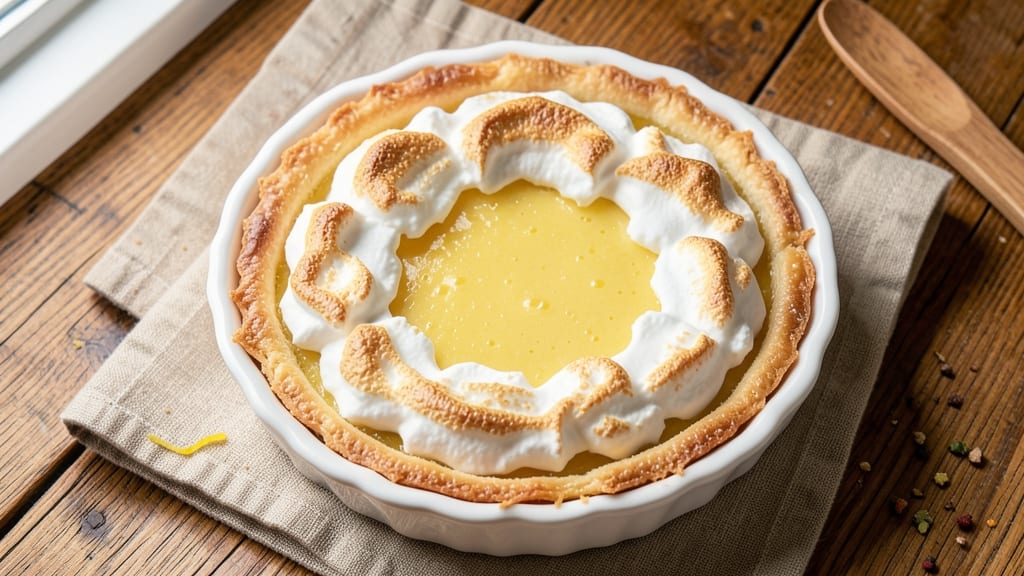
America's Test Kitchen's lemon meringue pie delivers the perfect balance of tart lemon filling and cloud-like meringue—a dessert that's both elegant and foolproof.
The secret lies in a buttery, flaky crust baked to perfection, a smooth, tangy lemon curd that sets properly, and a torched meringue that stays crisp without turning rubbery.
This recipe has been refined to eliminate common pitfalls like soggy bottoms or overly sweet fillings, ensuring every slice tastes like a classic American dessert.
What sets this recipe apart is the precision in technique: the crust is pre-baked to avoid sogginess, the lemon filling simmers until thickened to the right consistency, and the meringue is torched just enough to create a golden, crackly top.
The result is a pie that's visually stunning with its glossy meringue and vibrant lemon filling, while delivering a perfectly balanced flavor—bright, tangy, and just sweet enough. No special equipment is needed beyond a pie dish and a kitchen torch (or broiler).
The filling starts with zesty lemon juice and zest, balanced by cornstarch for a smooth, custard-like texture that sets firmly when chilled. The meringue, made with egg whites and sugar, is spread carefully over the filling and torched to create those signature peaks and a crisp exterior.
The key to success? Patience—letting the filling cool completely before adding the meringue ensures it stays light and airy, not soggy. This pie is the ultimate dessert for gatherings, holidays, or whenever you crave a taste of nostalgia.
Once baked, the pie develops a golden-brown crust, a smooth, vibrant lemon layer, and a meringue top that crackles with every bite. Served chilled, it’s the kind of dessert that feels special without being complicated.
The recipe includes tips for adjusting sweetness, storing leftovers, and even making it ahead—so you can focus on enjoying the results rather than stressing over details. Let’s get started on creating this timeless classic.
Ingredients for america's test kitchen lemon meringue pie
Precision ingredients for a perfect balance of tart lemon and cloud-like meringue brilliance.
| Ingredient | Amount | Notes |
|---|---|---|
| All-Purpose Flour 🌾 | 2 ½ cups | Sifted for light texture |
| Unsalted Butter 🧈 | 1 cup | Cold, cubed for crust |
| Granulated Sugar 🍚 | ¼ cup | Plus 6 tbsp for filling |
| Diamond Crystal Kosher Salt 🧂 | ½ tsp | For crust and filling |
| Large Eggs 🥚 | 1 whole | Cold, for crust binding |
| Ice Water 💧 | ⅓ cup | For dough consistency |
| Lemon Juice 🍋 | 1 cup | Freshly squeezed, about 4-5 lemons |
| Lemon Zest 🍋 | 2 tbsp | Fine, from 2 lemons |
| Cornstarch 🌾 | ¼ cup | For smooth filling texture |
| Large Egg Yolks 🥚 | 2 whole | For filling richness |
| Large Egg Whites 🥚 | 5 whole | Room temperature, for meringue |
| Superfine Sugar 🍚 | 1 ¼ cups | For meringue stability |
| Vanilla Extract 🌿 | ½ tsp | Pure, for filling depth |
The crust demands attention—cold butter and sifted flour are non-negotiable for that signature flakiness. European-style butter like Plugrá or Land O'Lakes works best, with visible fat content. For the lemon filling, freshly squeezed juice from organic lemons delivers superior brightness. The zest should be vibrant yellow, not pale or bitter. Bob's Red Mill cornstarch ensures a smooth, custard-like texture rather than a grainy filling. Pre-measure everything to avoid overmixing the dough—this is where most home bakers go wrong.
No fresh lemons? Bottled lemon juice works in a pinch, but reduce to ¾ cup and add 1 tbsp extra sugar to compensate for lower acidity. Substituting cornstarch with flour? Use half the amount, but expect a slightly thicker filling. For the meringue, room-temperature egg whites whip up faster—microwave for 10 seconds if needed. KitchenAid stand mixers handle the job better than hand mixers for large batches. The vanilla extract can be omitted, but the filling will lack depth. If you prefer less sweetness, reduce the sugar by 2 tbsp and adjust to taste after chilling.
Store the unbaked crust in the fridge for up to 3 days or freeze for 1 month wrapped tightly. The filling can be made 1 day ahead and refrigerated in an airtight container. Once assembled, keep the pie in the fridge for up to 5 days—the meringue will darken slightly but remains crisp. For serving, let it sit at room temperature for 30 minutes to enhance the lemon aroma. Reheat slices in a 350°F oven for 5-10 minutes to restore crispness if needed.
Why You'll Love This Recipe
- All the good stuff: real butter, fresh eggs, and just enough sugar to make it special. No weird ingredients or pricey shortcuts. It’s the kind of pie that makes you feel like you’ve treated yourself—without breaking the bank.
- No-Fuss Crust: I swear by this recipe’s shortcut crust—just flour, butter, and a pinch of salt. No rolling, no fuss, and it’s always flaky. Honestly, I’ve tried store-bought crusts, but this one’s the real deal.
- Tart-Sweet Magic: The lemon curd is where this pie shines: bright, buttery, and just sweet enough. The meringue? Toasted to golden perfection, with that crispy top that cracks under pressure. (Yes, even on a Tuesday night.)
- Leftovers? No Problem: This pie holds up for days—if it lasts that long. Slice it up and stash it in the fridge for breakfast or dessert. Between us, I’ve reheated slices straight from the fridge, and no one’s complained.
Step-by-step instructions for america's test kitchen lemon meringue pie
Mastering this recipe delivers a perfect balance of crisp pastry and velvety lemon curd topped with cloud-like meringue.
Prepare the Classic Pie Crust
In a large mixing bowl, combine the 2.5 cups all-purpose flour and 0.5 tsp diamond crystal kosher salt. Cut in the 1 cup cold cubed unsalted butter using a pastry cutter or your fingers until the mixture resembles coarse crumbs with pea-sized butter pieces. This texture ensures a flaky crust rather than a tough one.
Add the 1 whole cold large egg and 0.33 cup ice water, mixing gently just until the dough comes together. Divide the dough into two equal portions, flatten into discs, wrap in plastic, and refrigerate for at least 1 hour. Chilling relaxes the gluten, preventing shrinking during baking and ensuring a tender texture.
Roll and Blind-Bake the Crust
On a lightly floured surface, roll one dough disc into a 12-inch circle (about 1/8-inch thick). Transfer to a 9-inch pie dish, gently pressing it into the bottom and up the sides. Trim any excess dough hanging over the edge. For a pre-baked crust, line the bottom with parchment paper and fill with pie weights or dried beans.
Bake in a preheated 375°F oven for 15 minutes, then remove the weights and bake for an additional 10-12 minutes until the edges are light golden brown. The crust should be completely set but not darkened. Remove from the oven and let cool slightly before filling.
Make the Lemon Curd Filling
In a medium saucepan, whisk together the 1 cup lemon juice, 2 tbsp lemon zest, 0.25 cup granulated sugar, 0.25 cup cornstarch, 2 whole large egg yolks, and 0.5 tsp vanilla extract. Cook over medium heat, stirring constantly with a wooden spoon or silicone spatula, until the mixture thickens enough to coat the back of the spoon (8-10 minutes).
Immediately pour the hot filling into the pre-baked crust. The filling should be smooth and glossy with a pudding-like consistency. If any lumps form, strain it through a fine-mesh sieve before pouring. Let the filling cool to room temperature before adding the meringue.
Prepare the Meringue Topping
In a clean, grease-free mixing bowl, beat the 5 whole large egg whites with an electric mixer on medium speed until soft peaks form. Gradually add the 1.25 cups superfine sugar, 1 tablespoon at a time, increasing the speed to high after each addition. Beat until the meringue is thick, glossy, and holds stiff peaks when the beaters are lifted.
Spread the meringue evenly over the lemon curd filling, sealing it completely to the crust edges with a spatula. Use the back of a spoon to create decorative swirls or peaks on top. This step ensures the meringue doesn't slip during baking and creates a professional finish.
Bake to Golden Perfection
Transfer the pie to a preheated 350°F oven and bake for 15-18 minutes, until the meringue is golden brown and the filling is bubbling gently at the edges. Watch closely to avoid over-browning. Remove from the oven and let cool completely on a wire rack before slicing.
For the best texture, refrigerate the pie for at least 4 hours (or overnight) before serving. The flavors will meld beautifully, and the meringue will set into a light, airy cloud. Slice into 8 equal wedges and serve chilled for the ultimate lemon meringue experience.
Pro Tips For Making America'S Test Kitchen Lemon Meringue Pie
- CHILL THE CRUST: I learned this the hard way—skipping the 30-minute fridge rest before filling makes the crust soggy. Even if you’re eager to get to the lemon curd, give it time. Cold crust = crispy crust.
- WEIGH YOUR BUTTER: ATK’s recipe calls for cold butter cubes, but I used to eyeball it. Now I weigh them—about 120g for the crust—so every cube is the same size. Uneven butter means uneven flakiness.
- STOP BEFORE IT LOOKS DONE: The meringue’s golden brown is tempting, but resist. Pull it when it’s still pale yellow—it’ll keep cooking in the oven. Overcooked meringue turns rubbery, and nobody wants that.
- MAKE CURD IN STAGES: I used to dump all the lemon juice and sugar in at once, and the curd would curdle. Instead, temper the eggs by whisking in warm milk first, then add the rest slowly. Smooth curd every time.
Troubleshooting perfect results
Soggy Crust Solutions
A soggy crust happens when moisture from the filling seeps into the pastry. The fix? Always pre-bake your crust for 25-30 minutes at 375°F with pie weights until edges are golden.
Let it cool completely before adding filling—this creates a moisture barrier. I’ve found using parchment paper for blind baking prevents sticking better than foil. 🌡️
If your crust still feels damp, spread a thin apricot jam layer between the crust and filling. The fruit pectin acts as a sealant. For extra insurance, brush the pre-baked crust with egg wash (1 egg + 1 tbsp water) before adding filling.
This adds a protective barrier without altering flavor.
Lumpy Lemon Filling
Lumps form when cornstarch or egg yolks aren’t fully incorporated. Whisk your filling ingredients vigorous over medium heat—stirring constantly for 8-10 minutes until it thickens to 170°F. Strain through a fine-mesh sieve if needed.
I’ve learned to temper the eggs by whisking yolks with 2 tbsp cold filling before adding to the pot to prevent curdling. 🍋
For extra-smooth results, use a hand mixer on low speed while heating. If lumps persist, blend the filling with an immersion blender before pouring into the crust. Never skip the cooling step—adding meringue to warm filling causes collapse.
Meringue Problems
Weepy or collapsed meringue usually means the filling wasn’t fully cooled. Let it sit at room temp for at least 1 hour before topping. Use a kitchen torch for even browning—hold 3 inches away and work in 30-second bursts to avoid burning.
If your meringue won’t hold peaks, your bowl may be greasy—wash it with hot soapy water and dry completely. 🔥
For extra stability, fold 1 tsp lemon juice into the meringue before spreading. This adds acidity that helps it set better. If your meringue browns too quickly, tent with aluminum foil during the final 5 minutes of baking.
Store leftovers in the fridge—meringue darkens but remains crisp when reheated briefly at 350°F for 5 minutes.
Undercooked Filling
An undercooked filling will be runny and watery. The fix? Simmer until it reaches 170°F and coats the back of a spoon. If it separates, whisk in 1 tbsp cold water and cook for 1-2 more minutes.
For extra insurance, add 1 tsp lemon juice at the end to brighten flavors. 💡
If your filling is too thick, thin with 1-2 tsp warm water while whisking. The cornstarch-to-liquid ratio is critical—1:1 by weight ensures proper thickening. For a foolproof test, chill a spoonful in the fridge for 5 minutes; it should hold its shape without sliding off.
Nutrition facts
Frequently asked questions
Can I make this lemon meringue pie without a kitchen torch?
If you don't have a kitchen torch, use your oven's broiler. Place the pie on the middle rack and broil for 1-2 minutes, watching closely to avoid burning. For even browning, rotate the pie halfway through. The meringue should turn golden brown but not darken too much.
How do I adjust the sweetness of the lemon filling?
The recipe balances tartness and sweetness perfectly, but you can tweak it! Start with the full 0.25 cup sugar and adjust by 1 tbsp increments after tasting. For extra zing, add 1 tsp more lemon zest. Remember, the meringue adds subtle sweetness, so don't overdo it.
Why does my meringue collapse after baking?
Collapsed meringue usually means the filling wasn't fully cooled or the meringue was overworked. Always let the filling cool to room temperature before topping. Also, make sure your mixing bowl is completely grease-free—even a tiny bit of fat prevents proper stiff peaks. If it happens, try again with fresh egg whites!
Can I make this pie ahead of time?
Yes! Assemble the pie (with meringue) up to 1 day ahead and refrigerate uncovered. The meringue will darken slightly but stays crisp. For best flavor, let it sit at room temperature for 30 minutes before serving. Store leftovers in the fridge for up to 5 days—reheat slices at 350°F for 5 minutes to restore crispness.
What's the best way to store leftover lemon meringue pie?
Keep it refrigerated in an airtight container for up to 5 days. The meringue may darken but remains crisp. For longer storage, freeze the whole pie (without slicing) for up to 3 months. Thaw overnight in the fridge—never at room temperature—to preserve texture.