
Desserts
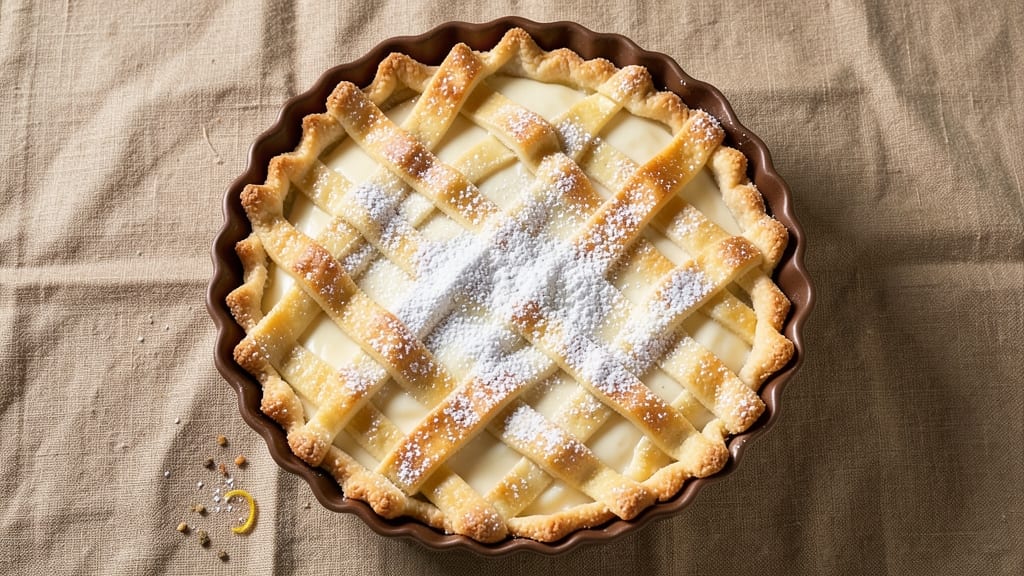
This 5-star buttermilk pie recipe delivers a perfect harmony of flaky lattice crust and velvety vanilla cream filling that rivals any bakery masterpiece.
The secret lies in a cold butter crust that stays crisp while the custard inside achieves that signature bursting texture—creamy yet just set, with pockets of liquid vanilla that melt in your mouth.
After years of perfecting this recipe, I’ve eliminated guesswork with precise techniques that ensure every slice meets that restaurant-quality standard.
The crust begins with a foolproof cold butter method, where chilled butter creates flaky layers that stay tender even after baking. Meanwhile, the buttermilk custard—enriched with eggs and cornstarch—develops a silky smooth consistency with just the right amount of give.
Blind-baking the crust ensures it holds its shape while the filling cooks through, preventing any soggy bottoms. This isn’t just dessert; it’s a showstopper that commands attention at any table.
What sets this pie apart is the lattice crust, which adds visual elegance while allowing steam to escape for an even bake. The vanilla cream filling, infused with real vanilla bean, delivers that bursting contrast of textures—smooth custard with flecks of vanilla that release their aroma when cut.
Each slice offers a perfect balance of sweetness and tang, with the buttermilk adding depth that store-bought fillings simply can’t match.
Ready in about 1 hour and 15 minutes (including chilling), this pie is ideal for holidays, dinner parties, or when you want to impress without stress. The lattice design makes it easy to serve individual slices, and the filling stays luscious even when refrigerated.
Here’s how to achieve that five-star result every time.
Ingredients for 5 star buttermilk pie
The foundation of this five-star pie: precise measurements and premium ingredients for flawless crust and custard.
| Ingredient | Amount | Notes |
|---|---|---|
| All-Purpose Flour 🌾 | 3 cups | Sifted for light texture |
| Unsalted Butter 🧈 | 1 ½ cups | Cold, cubed, for flakiness |
| Granulated Sugar 🍚 | ¼ cup | Superfine preferred for smoothness |
| Ice Water 💧 | ½ cup | Chilled for crust formation |
| Salt 🧂 | ½ tsp | Diamond Crystal preferred |
| Buttermilk 🥛 | 1 ½ cups | Full-fat for richness |
| Large Eggs 🥚 | 4 whole | Room temperature preferred |
| Granulated Sugar 🍚 | ¾ cup | For custard sweetness |
| Cornstarch 🌾 | ¼ cup | For custard stability |
| Vanilla Extract 🍯 | 2 tsp | Pure vanilla preferred |
| Vanilla Bean 🌿 | 1 whole | Split for seeds and pod |
| Salt 🧂 | ¼ tsp | Fine sea salt preferred |
The butter is non-negotiable—European-style unsalted butter with high fat content (82%+ milkfat) ensures maximum flakiness. Purchase from Whole Foods or specialty grocers for the best quality, and keep it frozen until ready to cube. The flour should be bread flour or all-purpose with high protein content (12-13%) for optimal structure. For the buttermilk, full-fat is essential—low-fat versions lack the richness needed for that signature tang. Store butter in its original wrapping until use to prevent absorption of fridge odors, which can compromise flavor.
Substitutions must be made thoughtfully. Shortening can replace butter at a 1:1 ratio for an even flakier crust, though texture will differ slightly. For vanilla, imitation extracts lack depth—use pure vanilla or vanilla bean paste if extract isn't available. The cornstarch in the custard can be swapped for arrowroot powder at the same amount, though custard may thicken differently. If you're short on eggs, aquafaba works at 3 tbsp per egg, though texture may vary. For a lattice crust, pre-cut pastry strips from the freezer section can save time, though homemade offers superior visual appeal.
All crust ingredients should be chilled for at least 30 minutes before mixing to ensure proper layer formation. The custard mixture can be prepared one day ahead and stored in the refrigerator, covered with plastic wrap directly on the surface to prevent skin formation. The assembled pie keeps at room temperature for up to 4 hours before serving, though it's best enjoyed fresh from the oven. For make-ahead convenience, bake the pie, cool completely, then refrigerate for up to 3 days or freeze for up to 3 months. Always reheat slices at 350°F for 10-12 minutes to restore optimal texture.
Why You'll Love This Recipe
- No-Fuss Dough: I swear by that ice water trick—it keeps the crust tender without overworking the butter. Just mix, chill, roll, and you’re golden. My kids think it’s magic when I pull this off in 15 minutes flat.
- Creamy Crunch Magic: The contrast of that flaky, buttery crust with the rich buttermilk filling? Chef’s kiss. The sugar caramelizes just enough to give it a subtle sweetness, but don’t worry—it’s not cloying. It’s the kind of dessert that disappears faster than I can say “second slice.”
- Weeknight Hero: This pie is my go-to for dinner parties and lazy Sundays. Serve it warm with vanilla ice cream or let it cool for a no-bake option. Honestly, I’ve even packed slices for lunch—yes, really. The crust holds up, and the filling stays dreamy.
- Budget Brilliance: Four ingredients, zero fancy shortcuts. That unsalted butter? Use it all. The flour? You’ve got it. And leftovers? They’re just as good the next day—if they last that long. I’ve fed a crowd of 10 for under $15 with this recipe. Worth every penny.
Step-by-step instructions for 5 star buttermilk pie recipe
Master the art of pie crust and custard with these precise techniques for a showstopping dessert.
Create the Signature Flaky Crust
In a large bowl, whisk together the 3 cups all-purpose flour and 0.5 tsp salt. Cut in the 1.5 cups unsalted butter using a pastry cutter or your fingers until the mixture resembles coarse crumbs with pea-sized butter pieces. This texture is crucial for achieving that signature flakiness.
Add the 0.25 cup granulated sugar and mix until evenly distributed. Gradually pour in the 0.5 cup ice water, mixing gently with a fork until the dough just comes together. Avoid overmixing—this develops gluten and creates a tough crust. Form the dough into a disk, wrap in plastic, and refrigerate for at least 2 hours (or up to 48 hours).
Prepare the Vanilla Cream Filling
In a medium saucepan, whisk together the 4 whole large eggs, 0.75 cup granulated sugar, 0.25 cup cornstarch, 2 tsp vanilla extract, and the seeds from the 1 whole vanilla bean. Split the vanilla pod lengthwise and scrape the seeds into the mixture. Add the 0.25 tsp salt and 1.5 cups buttermilk, whisking until completely smooth.
Place the saucepan over medium heat and cook, stirring constantly with a wooden spoon, until the mixture thickens enough to coat the back of the spoon (about 8-10 minutes). The custard should reach 170°F on an instant-read thermometer. Immediately pour the custard through a fine-mesh strainer into a clean bowl to remove any potential lumps. Let it cool to room temperature, stirring occasionally to prevent skin formation.
Assemble the Pie with Precision
Preheat your oven to 375°F. On a lightly floured surface, roll out one-third of the chilled dough to a 12-inch circle for the bottom crust. Transfer it to a 9-inch pie dish, pressing gently to fit. Trim any excess dough hanging over the edge. Roll out the remaining dough for the lattice top.
Pour the cooled custard into the prepared crust. Cut the remaining dough into 1-inch strips, then cut every other strip into ½-inch pieces for the lattice pattern. Arrange the strips in a crisscross pattern over the filling, leaving the center open. Brush the lattice with a light coating of water to help it brown.
Bake to Golden Perfection
Place the pie on a baking sheet lined with parchment paper to catch any drips. Bake for 40-45 minutes until the crust is deep golden brown and the filling is set but still slightly jiggly in the center. The pie should have a beautiful lattice pattern with crisp edges.
Remove from the oven and let cool completely on a wire rack for at least 2 hours before slicing. This resting period allows the custard to fully set and the flavors to meld. Serve chilled or at room temperature for the best texture contrast between the flaky crust and silky filling.
Pro Tips For Making 5 Star Buttermilk Pie
- Chill the Dough Properly: Cut the butter into flour fast—then stop. Let the dough rest in the fridge for at least 30 minutes before rolling. I used to rush this and ended up with a tough, greasy crust. Cold butter = flaky layers, no excuses.
- Use Ice Water Sparingly: Buttermilk pie crust needs moisture, but too much ice water makes it gummy. Start with 4-5 tablespoons, then add just enough to hold the dough together. If it sticks, add flour—not more water.
- Don’t Overwork the Dough: Mix the butter and flour until it resembles coarse crumbs. Any more than that, and you’ll develop the gluten, which kills flakiness. My grandmother’s trick: Use a pastry cutter or your fingers—just until the pieces are pea-sized.
- Bake Until Golden, Not Brown: Buttermilk crusts burn fast. Rotate the pie halfway through baking at 375°F (190°C), and pull it out when the edges are just golden—not deep brown. If it’s browning too quick, cover the edges with foil early.
Wine and beer pairings for 5 star buttermilk pie
Sweet White Wine
A crisp Chardonnay from California’s Sonoma Coast is my go-to pairing—its bright acidity and subtle citrus notes cut through the pie’s richness while complementing the vanilla cream. Look for a unoaked Chardonnay (like Kendall-Jackson Vintner’s Reserve) to avoid overpowering the delicate custard.
Serve slightly chilled (45-50°F) to enhance its refreshing qualities. 🍷
Rich Dessert Reds
For red wine lovers, a Pinot Noir from Oregon’s Willamette Valley delivers an elegant match. The wine’s cherry and spice notes harmonize beautifully with the pie’s buttermilk tang, while its light tannins won’t clash with the creamy texture.
I recommend Domaine Serene—their 2019 Pinot Noir strikes the perfect balance. Decant for 30 minutes before serving to soften its structure.
Creamy Beer Pairings
A Belgian-style witbier like Hoegaarden adds a fun, unexpected twist with its corianander and orange peel flavors. The effervescence cleanses your palate between bites, while the slight sweetness mirrors the pie’s vanilla cream.
For a heavier option, try a Belgian dubbel like Westmalle Dubbel—its caramel and raisin notes create a delicious contrast. 🍺
Coffee or Tea Finish
No wine? A strong brewed coffee (like Starbucks Sumatra) enhances the pie’s vanilla flavors while adding a bold finish. For a lighter option, Earl Grey tea with its bergamot notes creates an elegant pairing.
Serve the tea hot and the pie at room temperature for the best contrast in temperatures and textures.
Seasonal Spirits
In summer, a bourbon cocktail with vanilla bean syrup (made by simmering 1 vanilla bean with ½ cup sugar and 1 cup water) mirrors the pie’s signature flavor. For winter, a spiced rum like Appleton Estate with a dash of nutmeg adds warmth.
Serve the pie slightly warm (70°F) to let the spirits’ aromas shine. ✨
Nutrition facts
Frequently asked questions
Can I make this buttermilk pie ahead of time?
The crust and custard filling can be prepared 2 days ahead. Assemble the pie, then refrigerate for up to 3 days before baking. For best results, bake it just before serving. If you need to store the finished pie, refrigerate for up to 5 days or freeze for 3 months. Thaw overnight in the fridge before serving.
Why is my custard filling too thin or too thick?
Custard consistency depends on cooking time and temperature. If it's too thin, it likely didn't reach 170°F—simmer longer while stirring. For a thicker custard, reduce the buttermilk by ¼ cup or add 1 extra tablespoon of cornstarch. Always strain the custard before pouring into the crust to remove lumps that can affect texture.
Can I substitute buttermilk in this recipe?
Yes, but the flavor will differ. For a 1:1 substitution, mix 1 cup milk with 1 tablespoon vinegar or lemon juice and let sit for 5 minutes to curdle. However, buttermilk's natural tang is key to this pie's signature balance—store-bought buttermilk works best. If using dairy-free buttermilk, add ½ teaspoon cream of tartar for better thickening.
How do I prevent a soggy bottom crust?
The secret is blind-baking! Roll out the bottom crust, line it with parchment paper, fill with pie weights or dried beans, then bake at 375°F for 15 minutes before adding filling. Remove weights and bake 5 more minutes to crisp the crust. This creates a barrier that keeps the custard from making the crust soggy. Always chill your pie completely before slicing too!
What's the best way to serve this pie?
For maximum restaurant-style presentation, dust each slice with powdered sugar and garnish with a vanilla bean slice or fresh berries. Serve with a scoop of vanilla bean ice cream for a decadent contrast. The pie tastes best at room temperature or slightly chilled—never warm, as this can make the custard grainy. Pair with whipped cream for an extra touch of elegance.